You moved to New York as an adult. What effect did your imagination of the city from literature have on the way you experienced it?
The first time I visited New York was purely as a tourist—this was in 2006 or 2007—I distinctly remember emerging from the subway somewhere uptown and being surrounded by yellow cabs. My first, somewhat inane thought was “Oh, it looks like a movie!”—I’d never been somewhere that so gloriously corresponded to the vision I had of it. Before I even knew I was moving to New York, I was reading a lot of contemporary American fiction so the fatalist in me would say I guess there was something drawing me there. But, for anyone in the West who’s watched any TV or seen any movies, or read any books, it’s a place saturated with aspiration, as well as romance and history.
You could say New York is a physical city that has all these fictional remnants swirling around it.
Yes—the way New York is constantly rewritten was something that was really driving me as I wrote Neon in Daylight. The city is an emotional palimpsest for all its inhabitants. There’s that certain street corner, where you had your first kiss with someone, or there’s that street crossing where you had an argument. These places become so emotionally freighted for everyone who lives in the city and, of course, that might be the same street corner that you see in, say, Woody Allen’s Manhattan. I love the way our emotional experience of a city becomes refracted through its fictional iterations.
In your book you clearly and deliberately name the places in New York that things were taking place. It created this really interesting contrast between the rootless chaos of the people’s lives and the physical solidity of the city—which, in the case of New York, is monumental.
Monumental is the right word. Even the monumental human and topographical loss of the Twin Towers, a conspicuous loss, has not stopped the New York skyline remaining, unmistakably, the New York skyline. In the book Kate thinks the word “indomitable” in relation to it.
“The city is an emotional palimpsest for all its inhabitants”
As you say, all three of the characters in the book are chaotic, messy, uncertain. The decision to ground things very specifically in place came from dealing with something which is so legible and reiterated in fiction (and non-fiction). In that sense, it seems like too much of a stretch to mess with New York’s geographical realities. I’m always excited by that tension in fiction between solid realities, which help sustain the reader’s suspension of disbelief because they feel grounded—here is Union Square—and pure fiction. There is, to my mind, a sort of sweet spot in between, where the reader has to do just enough work to create the thing in their mind.
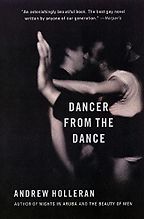
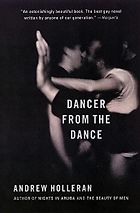
Your first book is Dancer from the Dance by Andrew Holleran.
I’m trying to remember how I found this book, because it gave me a sense of gleeful discovery, like it was this secret I’d been lucky enough to be party to. I think it was well-regarded when it was published, but I feel it’s been neglected since then, so it’s nice that I get to talk about it here and champion it a bit.
It depicts gay New York in the 1970s, and it’s set on Fire Island, but also in downtown Manhattan night clubs. The images I retain from it are these ecstatic, sweaty, dancing bodies, and then deserted, deep, snowy, freezing Manhattan streets, and that feverish contrast between an underground world—literally and figuratively—of joy, release and sexual freedom and these cold, empty, dodgy, dangerous New York streets. It’s a love story and it’s written in this really lush, heady prose. It has this exquisite elegiac air, which obviously compounds the poignancy of the tragedy of Aids and the way that this huge swathe, this generation of people, were lost in New York—and elsewhere.
Is that New York a lost utopia?
The book is pre-Aids, but reading it now, there is of course a retroactive sense of tragedy. I often think if I could go back in time I’d choose New York of the 80s, the era of David Mancuso’s Loft and Paradise Garage and Area. Hopefully there will always be ecstatic gatherings of people in New York. Hopefully there will always be places where people dance.
Like many of the books we’re going to discuss, this is the story of outsiders. Does New York fiction tell the story of outsiders? And, indeed, who are insiders in New York?
New York is a city of immigrants. You become a New Yorker through being in New York, not through having been born in New York. I don’t know what an insider would look like. What makes you a self-defined insider is probably money, which does seem more egregious than ever in New York right now, and perhaps in London too: a widening gulf. To live in Manhattan, you basically have to be very rich.
“If I could go back in time I’d choose New York of the 80s, the era of David Mancuso’s Loft and Paradise Garage and Area”
Having an outsider protagonist is often a default of fiction because it allows the narrator to observe things more clearly and acutely. I think that’s why so many novels, New York ones and otherwise, have an outsider sense in them. It’s almost a function of craft more than anything else: if the story were narrated from the perspective of an insider there would be a kind of obliviousness, unless it was a particularly attuned insider…
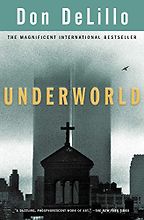
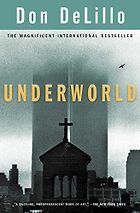
Book number two is Don DeLillo’s Underworld, from 1997.
Underworld, where to begin? It’s the kind of book that makes me want to make superlative, hyperbolic claims, like “the greatest novel of the twentieth century”. I read it in my last year of university; it was one of those reading experiences I can recall specifically. I just sat in the library in the same chair for four days and all I did was read Underworld; it was completely overwhelming.
I just finished this novel called Flights, by Olga Tokarczuk, which has a description of a brilliant professor’s mind and the freakishness of it—his wife asks herself how all that mind and all that knowledge could fit into a person without his head becoming a sort of enormous, distended monstrosity. Reading Underworld, I felt that same kind of almost-monstrous overwhelm. It’s such an extraordinarily vast and all-reaching book. Much of it is set in New York, and I think one thing DeLillo does so brilliantly—and does better than anyone else—is create a sense of cross-currents and coincidence. Of course, Manhattan is mainly a grid system of streets, so it really serves the book’s depiction of intersecting forces and intersecting lives. I loved and tried to steal some of that sense of the city enabling collisions, as well as the novel’s network of signs and their resonance. Obviously only DeLillo can do it like DeLillo but still, us flailing awed mortals have to try.
It’s quite rare that I reread things, but a year or so ago I reread Underworld. So, a decade on. First it was extraordinary in that it didn’t live up to my memory, it exceeded it. It was even more of a work of genius than I thought. But there’s also so much that I hadn’t seen when I was twenty-one, because we’re all kind of dumb when we’re twenty-one—well I bet DeLillo wasn’t. For example, he’s so great in Underworld on the way men and women interact. No one seems to talk about that, probably because gender wasn’t as fashionable a topic in 1997. It’s a mind-blowing book, everyone should read it.
It has historical characters in it, am I right?
It does: J Edgar Hoover and Lenny Bruce, there’s also a lot of slightly fictionalised history.
This seems to be the case in the other books on New York you have chosen.
Yeah, that’s true. That takes us back to where we began, and the fact that, because New York is so known, it has such a corpus of consensus reality surrounding it. There are limits to how far you can fictionalise it, at least if you’re working in a broadly realist realm. There’s something in New York that’s resistant to radical revision in fiction. There are some elements of it that are solid—and no less resonant for being so—and you have to work with them, you can’t completely rewrite or overturn.
I wonder if there’s a sense of the city being so baggy that it can take it.
Absolutely. Baggy’s a good word. It’s endlessly expanding; it’s a capacious city.
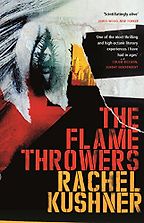
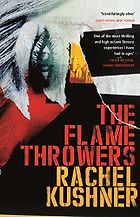
Your next book is The Flamethrowers, from 2013, a historical novel.
Yes, it’s set in 1970s New York: a period that I, like so many people, am quite drawn to. The idea of New York, and lower Manhattan in particular, as somewhere lawless and even revolutionary and creatively radical is so appealing and so alien to us now. Now of course, you get out of the subway at Prince street and on one corner there’s Dean and DeLuca—a very fancy food store—and on the other corner there’s Prada. But in the 1970s that was all artists’ lofts. The Judd Foundation is still there: Donald Judd’s home preserved. It’s thrilling to be there and remember that this was how it was, although I think it’s too easy—and creatively stymieing (and just uncool!)—to overly romanticise that time.
Some of The Flamethrowers takes place in revolutionary Italy, but much of it is set in the art world of the 1970s. The book is mordant, that’s the only word, in terms of sexism and gender. Kushner has this great line about a character who’s an older guy, something like “he had that affliction common in all men over the age of sixty, which is the inability to stop talking” in a dinner party scene where he just bloviates and bloviates.
“New York is so known, has such a corpus of consensus reality surrounding it, that there are limits to how far you can fictionalise it”
I always find descriptions of art in novels incredibly exciting because, within the paradigm of modern art, if you’ve written a work of art into a novel, that makes you an artist; there’s this agreement that to be an artist is to have the idea—you don’t necessarily need to execute it. If you’re Andy Warhol, you can get other people to do your silk-screen prints, or if you’re Damien Hirst it’s other people who make your spot paintings. And so on. It was also exciting to encounter artists in the book and wonder how much of them was drawn from real artists. I mentioned Donald Judd earlier: one of the main characters in The Flamethrowers—the romantic interest of the protagonist—makes brushed, stainless steel boxes that are very Judd-like. It feels so delightfully audacious on Kushner’s part, to take someone as monumental, in both senses—reputationally, aesthetically—as Donald Judd and rewrite him. It’s the same kind of audacity as playing with New York and making it your own as a writer, taking something monumental and shaping it to your own characters.
We’re also touching on self-fashioning here. It feels like the city is pliable in the hands of the writer as well.
In The Flamethrowers there is a passive quality to the main character, Reno, at least when she’s in New York. (She competes in a motorcycle race on the Utah salt flats, which is by no means a thing you could describe as passive.) But there’s this sense of her as a young woman hanging out with these artists who are much older and who are fluent socially as well as artistically: the way that the creative world overlaps the social world and how she doesn’t speak this language. They’re all full of self-confidence, or at least seem to be. There’s a sense in the novel of the way that we make ourselves through other people, as well as through the city. We make ourselves up, and that’s definitely something that Kate is doing in Neon in Daylight—trying on different personae for herself, through different people she meets. I think New York, being a hyper-conscious place, is somewhere where that process is even more conspicuous. You’re meant to be—I’m going to use a word my brilliant teenage mentee uses a lot—”extra”. It’s encouraged to be bigger and “better” and brighter and more dynamic and all the rest. It’s dissimilar to embarrassable London in that way—in London, that sort of egregiousness is discouraged.
London is all about understatement.
Yes, there can be a really overstated quality to New York. Overstated, literally, in the sense that we keep talking about it in terms of its endless fictive iterations! But also in terms of the audacity of this city, and the way it compels people to be audacious themselves. There’s a boldness. People ask each other out on the street! The first time I visited New York some guy on the subway yelled “lookin’ sharp, modernist!” to my boyfriend and I don’t think either of us got over it for weeks.
One New York Times review of your book describes Kushner’s Reno as “splendidly vacant” while pointing at the figure of the passive female protagonist in your book and other feminist books. Why do these characters recur?
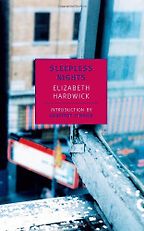
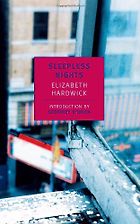
I was just refamiliarising myself with Elizabeth Hardwick. There’s this line in Sleepless Nights when the narrator Elizabeth, who both is and is not Elizabeth Hardwick—she was ahead of her time in terms of autofiction—says “it certainly hasn’t the drama of: I saw the old white-bearded frigate master on the dock and signed up for the journey, but after all, ‘I’ am a woman”. It conveys this sense that a drama of self is, or has been, denied to women. Years ago, I interviewed Rivka Galchen, whose fantastic first novel has a male narrator. I was so impressed by the way she spoke—it was almost guileless—when she said “all the books I had read growing up had male narrators, so it barely occurred to me to write a female narrator”. We make ourselves from fiction, partly. It was natural to her that she had a male narrator.
I was amazed by that review of my book. To be mentioned alongside those female, central, slightly passive narrators of Joan Didion and Elizabeth Hardwick and Renata Adler, was obviously astonishingly flattering. It was just overwhelming to me to be put in that company.
But to the question of why these characters recur. First, as I said, I think it’s an almost formal function that the narrator be slightly passive, because then we as the reader can see more. But I also think there could be a reductive interpretation of feminism here, which is that to be a good feminist woman is to have strong opinions and act on them. In one sense, fine, that sounds great, I’m all for that in life on and off the page. But women are also human beings and this state of uncertainty is inherently human. My experience of my twenties was, in one word, confusion. It was a state of not quite knowing what I wanted, but knowing that I wanted it very badly. I think that’s where the most interesting fiction comes from, from central characters who aren’t quite sure. It seems like a more fertile territory than someone on a very specific, narrow mission.
In terms of Elizabeth Hardwick’s Sleepless Nights [1979], how does the protagonist occupy space in the city specifically as a woman? I’m thinking about the figure of the flâneuse.
She is occupying space as a woman, but I would also say she’s occupying the space of her own memory, for which New York is a vessel, or a conduit. To occupy the space of one’s own memory sounds almost axiomatic, and yet I think for a woman it is something quietly radical, because it means, essentially, to take one’s subjectivity seriously. It is a sort of owning of self. I was just reading Joan Didion’s review of Sleepless Nights, and she writes, and this is 1979, “the mysterious and somnambulistic “difference” of being a woman has been, over 35 years, Elizabeth Hardwick’s great subject, the tropic to which she has returned incessantly” and also, “The method of the ‘I’ in Sleepless Nights is in fact that of the anthropologist, of the traveler on watch for the revealing detail: we are provided precise observations of strangers met in the course of the journey, close studies of their rituals”.
“You become a New Yorker through being in New York, not through having been born in New York”
Sleepless Nights is, or was, an unconventional novel—it’s essayistic, in a way we’re now familiar with. Its descendants are works by Maggie Nelson, Sarah Manguso and Jenny Offill—these digressive forms that take as their subject the writer’s own subjectivity.
That all said, New York is the setting, it’s narrated by a young woman who recently moved to New York. She goes backwards in memory, but she also meets a lot of people. There’s an incidental quality to the book. It’s only quite recently that we’ve made space for the feminine version of the flâneur—the flâneuse—in fact, there’s a book by Lauren Elkin called Flâneuse that I’ve wanted to read since it came out. For a woman to watch and to observe, people get a bit freaked out by that. Woman aren’t really “meant” to stare. Kate, in my book, does a lot of staring at people and things. I think the gaze is always about desire, although not necessarily sexual desire. Looking and wanting have such an interesting, inextricable relationship. We gaze at stuff we want and advertising works by giving us things to look at that we want. Wanting to want things is, sort of, to be alive. Not in the gross, capitalistic sense, but in the humanistic sense. Desire is part of being human.
I think this is why these passive female characters keep recurring. Women know we should want things, but we’ve been objectified for so long that we don’t know how to turn that desire outward. Perhaps the first stage of desire is to be someone who looks, because it’s okay not to be the thing that’s just looked at.
To appraise the world, right?
Yes.
An appraisal is both a form of writing—it’s taking in and digesting—but it is also a realm of desire. Even now, it does seem as though the question of what women want—what we’re meant to want—is fraught in a way that it isn’t for men. I’m talking about normativity, by which I mean established narratives on how we should be. Sheila Heti’s amazing book How Should A Person Be? addresses this, the title is knowingly disingenuous (I think…) because it’s really How Should A Woman Be?
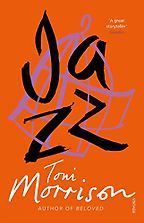
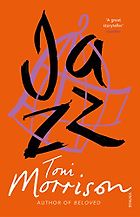
Let’s discuss Jazz by Toni Morrison, which was written in 1992.
I had the enormous privilege of interviewing Toni Morrison a few years ago for the Guardian. We talked about Jazz a bit and in this sweetly, self-mockingly disgruntled way she said “Yeah, I really liked it, it is overlooked”. It’s set in the 1920s and in it there’s a beautiful commingling of jazz, Harlem streets and a sense of romance and possibility. The novel, formally, feels like a piece of jazz. It feels like riffs and improvisations and recurring refrains. In that sense it’s a fairly experimental novel, which is perhaps why it hasn’t been as seized upon, or lauded, within her oeuvre.
Again, I think it’s a novel of desire and intoxication, something we keep coming back as we talk about New York and its fictions.
I read that she said to her creative writing students “I don’t want to hear about your little life, ok?” Which is such a brilliant thing to say. Do you think this lesson is true in the case of this book? Does she capture something about New York on a wider scale?
Absolutely. Although, is there any such thing as a little life? I like to think most lives are large, at least to the people living them. But yes, I deeply admire all those novels which do both, the little lives—the tiny domestic moments, the gradations of emotion within an interaction—as well as the largeness—the forces of history and culture inflecting all those little lives. Though it’s set in the New York of the 1920s, Jazz reaches backwards into the history of the American South. It feels, in the same way as the city does, bigger than the sum of its parts. You described the city as “baggy”, which I think is a great word. The way that characters can feel enlarged by being in a place so large and so dense.
Five Books interviews are expensive to produce. If you're enjoying this interview, please support us by donating a small amount.
Jazz as a form of music is such a maximalist, expansive, liberated form, so it seems entirely appropriate to a city that so often shares those characteristics, a city that—not to be hopelessly romantic about it—often does promise, falsely or otherwise, a limitlessness, a sense of expansion.
I wanted to ask about Harlem’s gentrification and memorialising the past of parts of the city. It seems from the perspective of gentrification that this memorialisation comes from a space of privilege—which isn’t the case in literature.
A few years ago, there was a spate of books that were about, or set, in 1970s New York. There was James Wolcott’s memoir Lucking Out and of course Patti Smith’s Just Kids, which was such a phenomenon. I am not exempting myself from enthusiasm about those books, but romanticising anything always feels essentially dodgy and yes, it strikes me now that this little cultural moment was very white. More broadly speaking, we know of course that history gets written by the oppressors, that’s almost axiomatic. New York in the 1970s and 80s and even early 90s might have been readily romanticised if you were, say, a healthy, educated white musician living in a cheap loft, but if you were a person of colour the city was probably shitting on you. My understanding is that Robert Moses did a lot of damage, in that respect.
I was thinking about how to own those stories of the past. I guess my overwhelming sense is, as you imply, that a lot of ownership of New York is very white. Literature is a good place to oppose that because of its interiority, and because it’s not located anywhere and you don’t have to pay very much for it.
Yes, I love the idea that literature can be a sort of reclamation. I think that pertains to the Holleran novel too. It’s this really exquisite and explicit depiction of gay life and a whole world that had to be closeted because of both legal and social constraints, or disapprobation. But reading, potentially, is open to anyone—though we could have a whole other conversation about the whiteness of the publishing world…
It’s always been interesting to me that Toni Morrison has said explicitly “I’m writing for black people”. That seems courageous and honest and deeply admirable.
As we’ve been saying throughout, the city is multi-layered.
That was something I was trying to evoke in the novel. There’s a scene where the character Bill stumbles across what turns out to be a Santeria sacrifice in Prospect Park, Park Slope: a place I thought of as one-note in its character, specifically: wealthy white families pushing strollers. And, of course, as with every part of New York, there are different layers and different communities in every place, it is different things to different people. That is so thrilling to me, and I guess this takes us full-circle to the idea of the palimpsest and layered lives: we can move through a space and be inhabiting just one layer and yet there are all these other simultaneous layers or dimensions happening.
And that’s perfectly expressed in literature.
Exactly. Because, as you said, the writer has interiority as one of her tools. And of course language itself, which… well, it’s the subtlest, most layered medium of all, right?
Five Books aims to keep its book recommendations and interviews up to date. If you are the interviewee and would like to update your choice of books (or even just what you say about them) please email us at [email protected]